Content gap analysis used to mean "keywords your competitors rank for and you don't." The AI-search version has been rebranded as "prompts where AI cites competitors instead of you," which conveniently requires a paid prompt-tracking tool to find. There's a version you can do for free, from data you already own, and it starts with an embarrassing example from our own site.
What is a content gap in AI search?
A content gap in AI search is usually described as a prompt where an AI answer cites your competitors and not you. That definition is hard to act on, because you can't see which prompts were run or which sources were cited without a third-party tool.
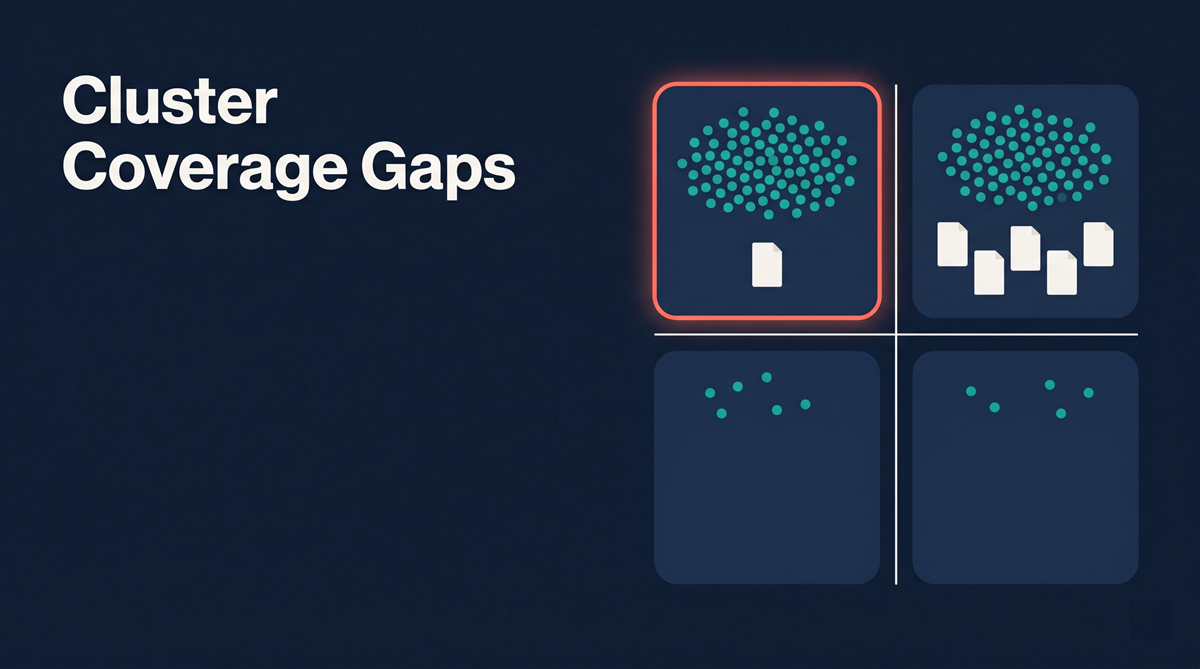
A more measurable definition: a cluster coverage gap is a topic where your site earns many impressions across many queries, but you have only one page, or no page, built to cover it. It shows up in your own Search Console data.
How is an AI content gap different from a keyword gap?
A keyword gap compares keyword lists between you and a competitor. A cluster coverage gap compares what searchers ask around a topic with what you've published about it.
Why that matters for AI: AI Overviews and AI Mode may issue several related searches across subtopics to build an answer (Google Search Central). A topic where you only cover one slice gives that process less of yours to use. Fan-out is explained in what query fan-out is.
How do you find the topics your site is missing?
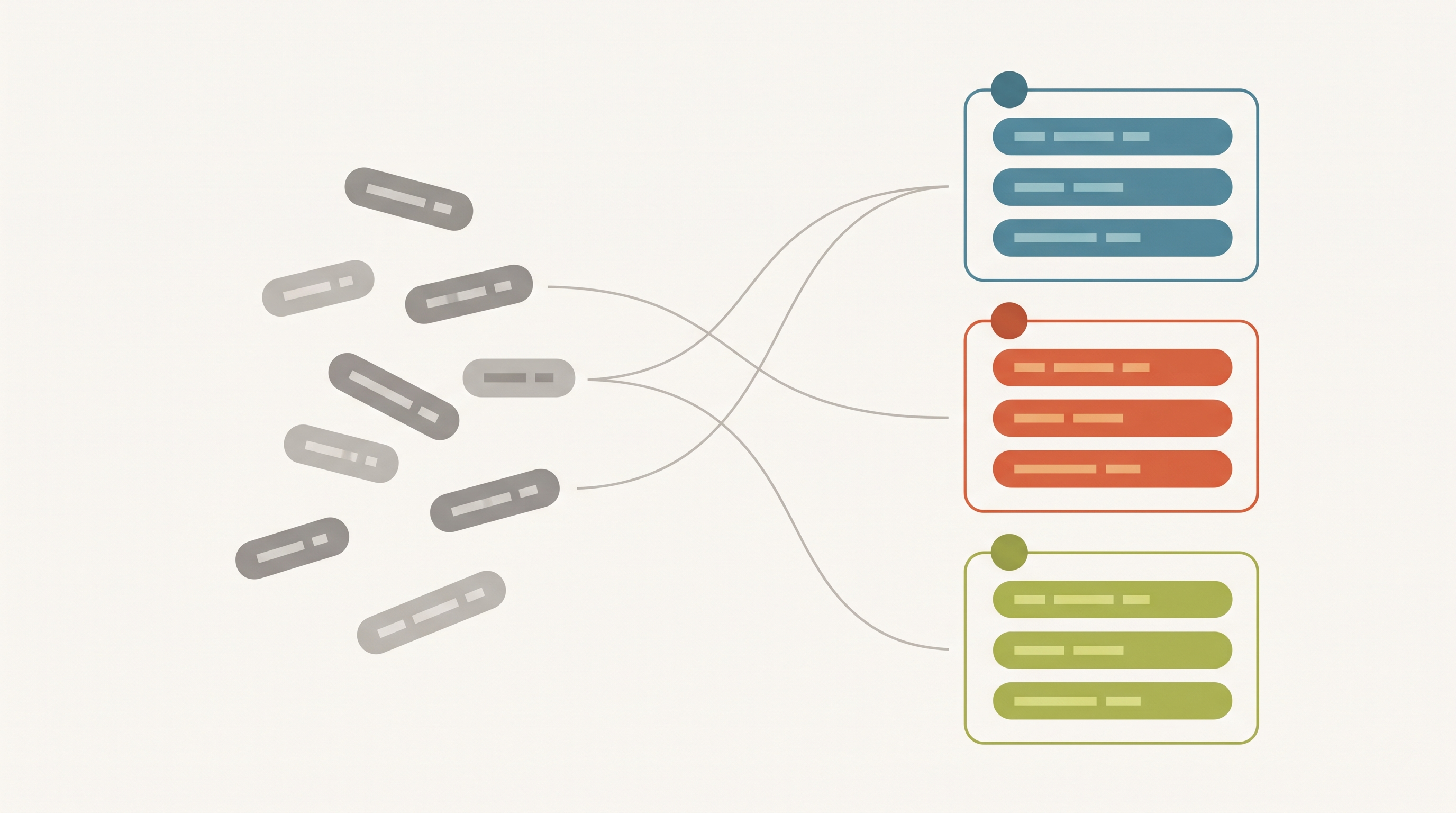
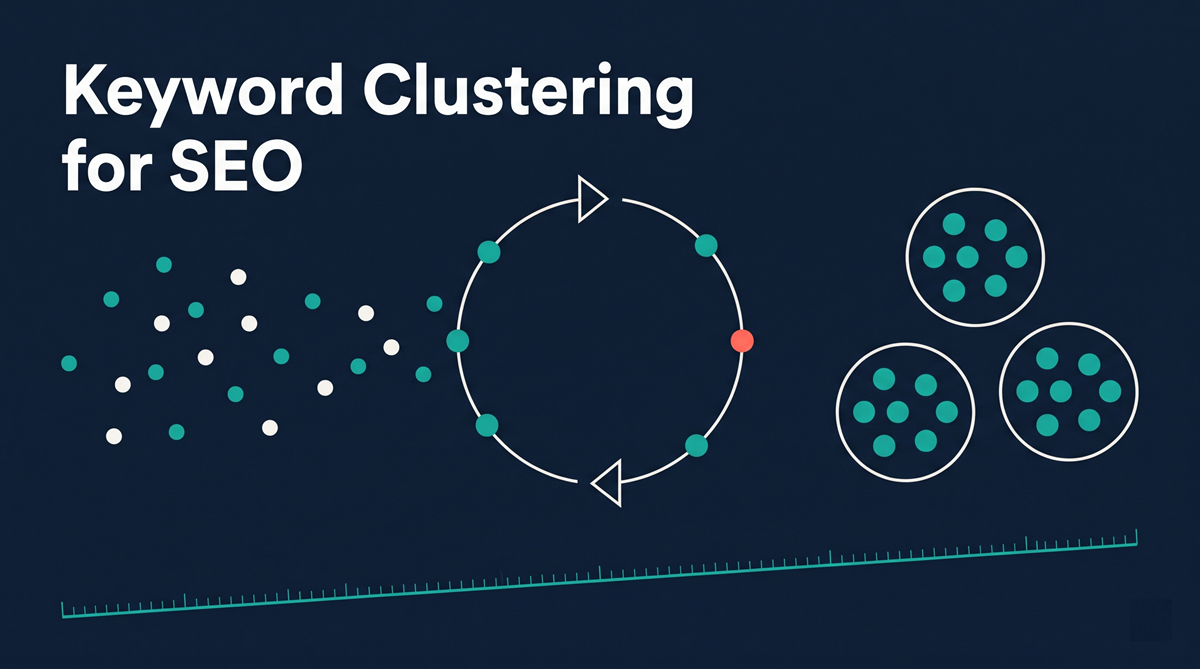
Use the clusters you already have. Take your queries, group them by topic (see what keyword clustering is), and for each cluster record two numbers: impressions and pages built.
Then plot them on a 2x2:
| Few pages built | Many pages built | |
|---|---|---|
| High impressions | Coverage gap. Start here. | Healthy |
| Low impressions | Low priority | Possible over-investment |
The top-left box is your gap list: topics where demand is visible and your coverage is thin.
A real example from our own site
Our own export gave a clean case. The /blog/ index page picked up 3,722 impressions for "keyword grouping" searches. Our best read is that no dedicated page existed for the topic, so Google showed the closest page it had. The index page isn't written to answer that query.
High impressions, no purpose-built page. That's a coverage gap, and it's the clearest argument for writing the page.
Your version will look similar: an index page, a category page or a loosely related post collecting impressions for a topic it was never written for.
Why does AI cite competitors instead of my page?
Nobody outside Google can say for sure, and sources that claim to are guessing. What you can check are the likely causes:
- Topic gap: you don't cover the subject at all.
- Depth gap: you cover it with one page where the subtopics need several.
- Intent gap: your page answers a different intent than the question asked.
- Format gap: the answer is buried, not stated plainly under a clear heading.
- Structure gap: the page isn't linked from anywhere, so it's hard to discover.
The last one is easy to check and often overlooked. Look for orphan pages: pages with no internal links pointing at them. Add links from related pages, and map each page to its cluster.
Google says there are no special requirements for AI features (Google Search Central). Closing a gap is ordinary content work, not an AI-specific trick.
What to do with the gap list
- Rank gaps by impressions. Most impressions first.
- Check the existing page for each. Is it thin, off-intent, or missing?
- Decide: new page or expand. If the queries share one intent, expand. If they split into several intents, write several pages.
- Write each page with direct answers. See keyword clustering for AEO.
- Link it in. Connect the new page to its pillar and sibling pages.
- Re-measure. Come back after the next Search Console cycle and see whether the cluster's impressions and position moved.
How often should you run a content gap analysis?
Quarterly is enough for most sites. That's a judgment call, not a standard. Sites that publish weekly may want it monthly. Search Console data lags by a couple of days, so checking daily doesn't buy you anything.
Where TrackClusters fits
TrackClusters shows impressions, clicks and average position per cluster, from your own Search Console data. That's the impressions side of the 2x2 above. You count the pages you've built for each cluster yourself. It doesn't find topics you have zero impressions for, because it has no keyword research data. The pricing page has the plans and the 7-day free trial.
FAQ
What is a content gap in AI search?
Commonly, a prompt where AI cites competitors and not you. A more measurable version is a topic with high impressions in Search Console and few pages built for it.
How is it different from a keyword gap?
A keyword gap compares your keywords with a competitor's. A cluster coverage gap compares demand around a topic with the pages you've published for it.
How do I find content gaps without a paid tool?
Cluster your Search Console queries, then compare each cluster's impressions with the number of pages you have for it.
Why would an index page rank for a topic?
When no page covers the topic well, Google shows the closest match. It's a sign you need a dedicated page.
What is an orphan page?
A page with no internal links pointing to it. It's harder for crawlers and readers to find.
How often should I run this analysis?
Quarterly for most sites.
Can closing a gap guarantee AI citations?
No. Nobody can promise that. It improves your coverage of the topic, which is the part you control.
Comments
Join the discussionNo comments yet. Be the first to comment.