How to Build Topical Authority with Keyword Clusters
Every SEO guide tells you to build topical authority. Almost none tell you how to know when you have it. The standard measurement advice is "check your rankings," which is how you measure everything and therefore tells you nothing about this.
Here's what topical authority is, what Google has and hasn't said about it, how to build a topical map from keyword clusters, and a scorecard you can use to measure it per cluster.
What is topical authority, and is it a Google ranking factor?
Topical authority is the idea that a site covering a subject thoroughly is more likely to rank for it than a site covering it thinly. It is not a Google ranking factor you can point to. Surfer's study of the topic puts it directly: "Although the term 'topical authority' is often discussed in the SEO industry, it's not a term that Google uses." The closest Google reference Surfer found relates to news topic authority (Surfer).
So treat it as a working theory, not a setting. The theory has practical support: a site that answers every question around a topic gives searchers, and AI systems that expand a question into sub-queries, more of what they need in one place. That's good content strategy whether or not Google has a name for it.
How do you create a topical map?
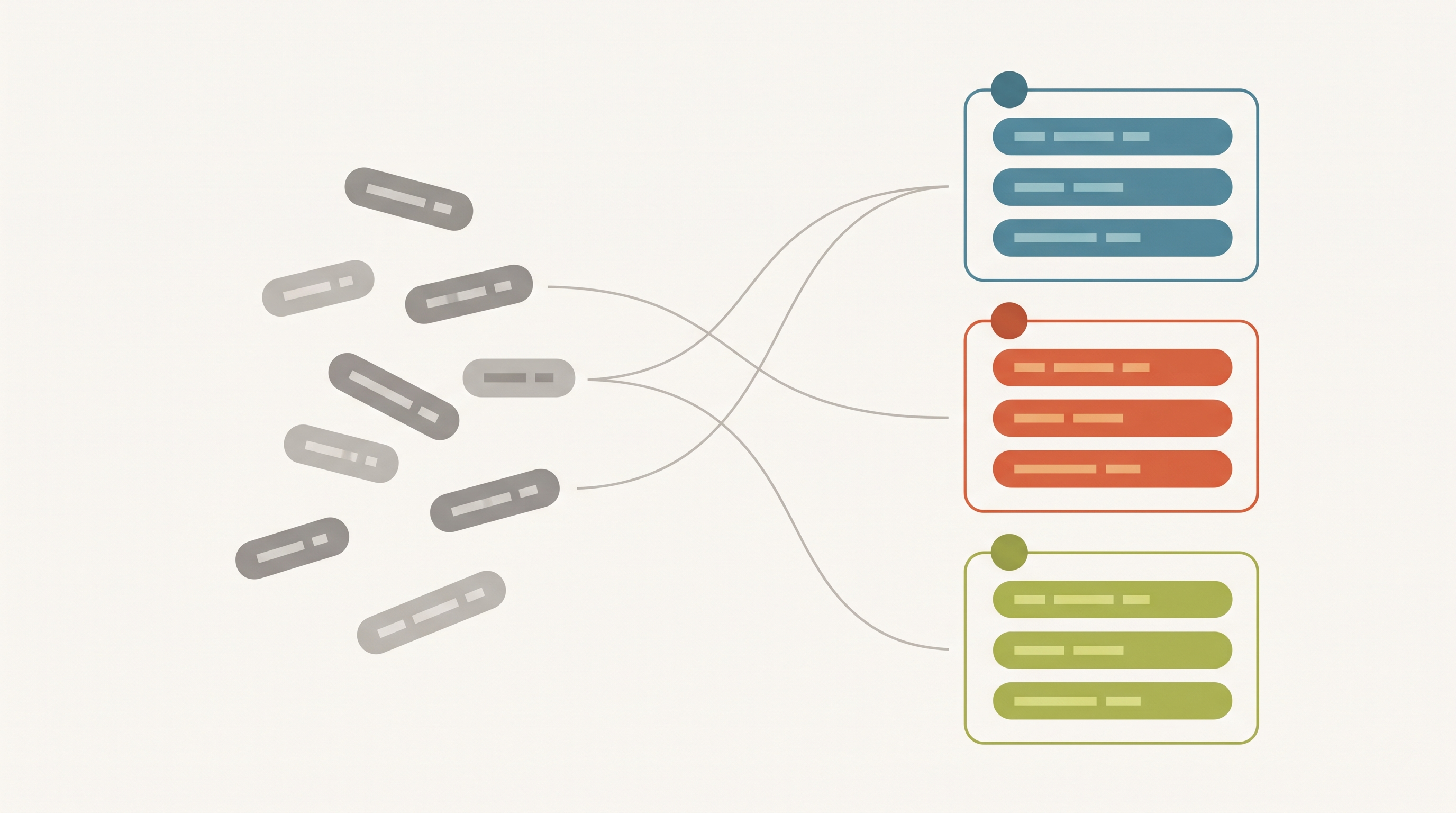
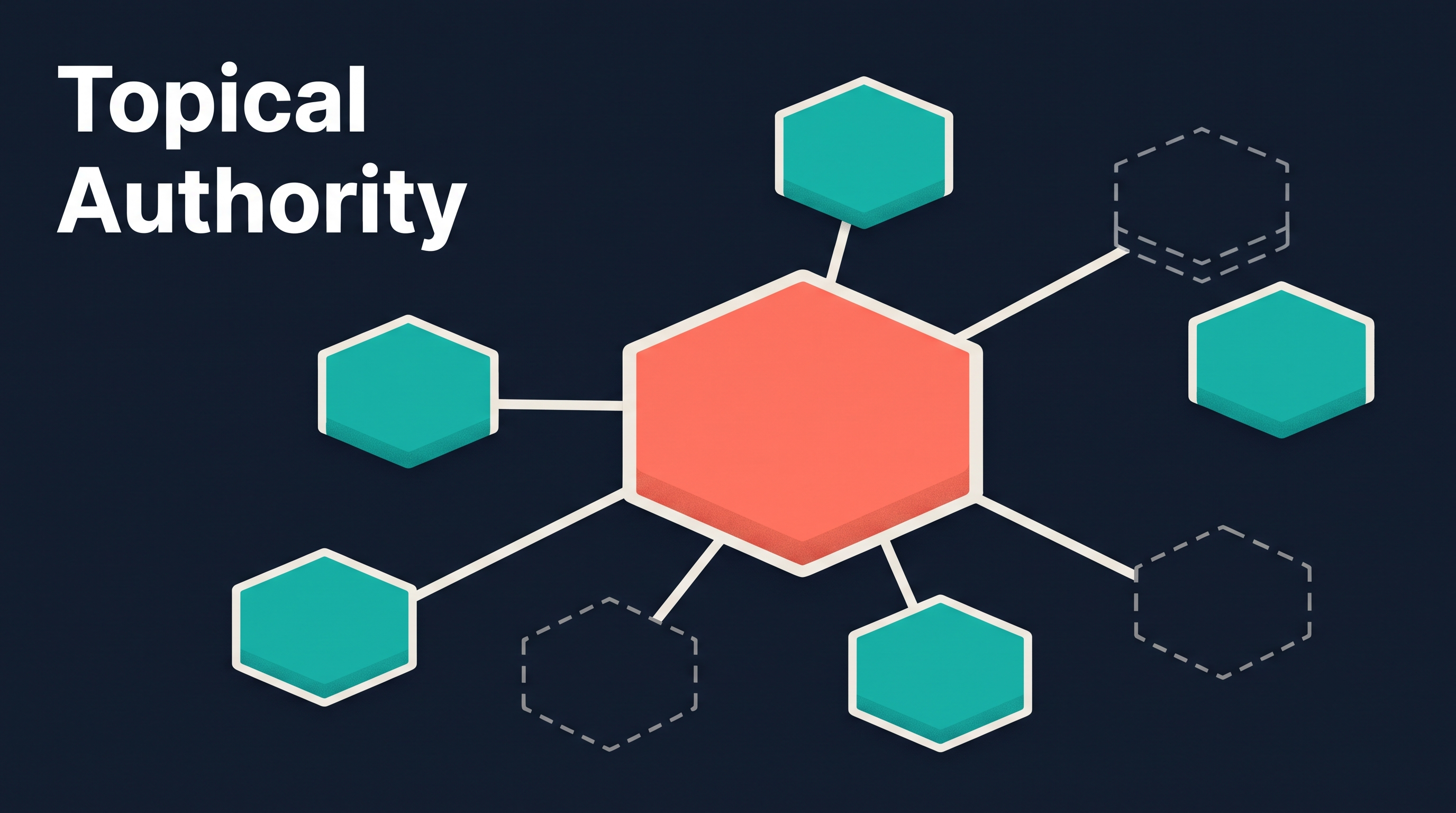
A topical map is a plan of the pages you need to cover a subject, grouped by subtopic. Build it from keyword clusters instead of guessing:
Pick the core topic. One subject, such as "keyword clustering."
Collect every query around it. Start with your own Search Console queries, then add keyword research for what you don't rank for yet.
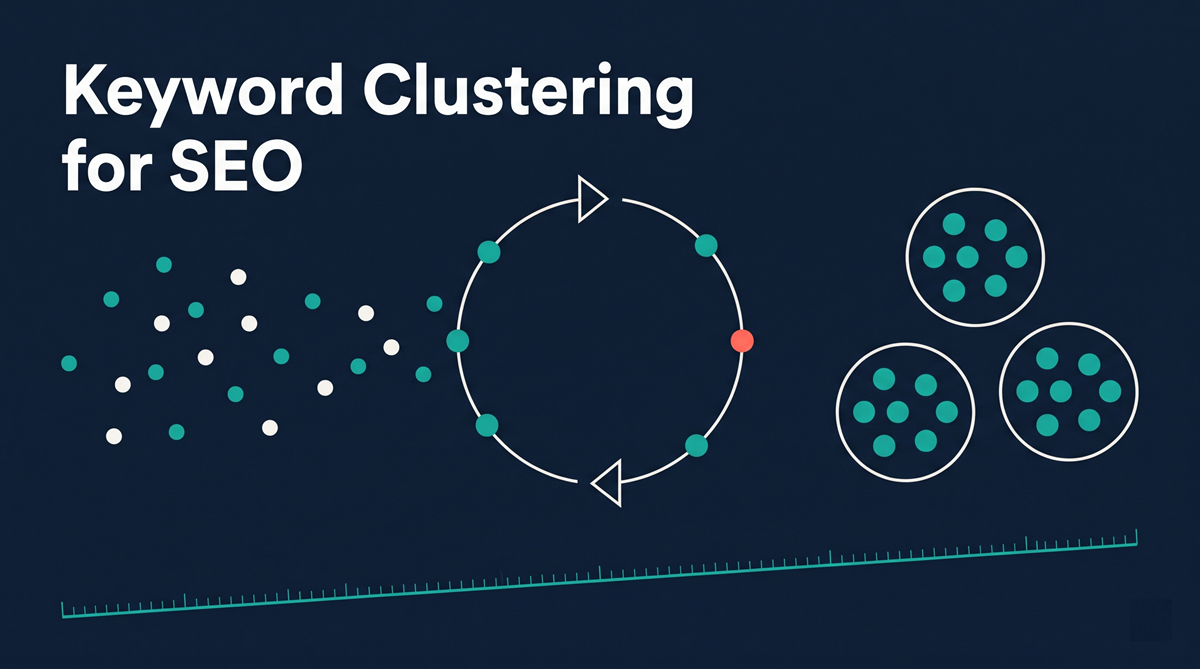
Cluster by intent. Group queries that belong on the same page. Semantic keyword clustering catches queries that share no words but share an intent.
Assign each cluster a page and a page type. Definition, how-to, comparison, list.
Mark what exists. For each cluster, note whether the page exists, is thin, or is missing.
Add internal links. Pillar to clusters and back, and between related clusters.
The finished map is a table, not a mind map. Each row is a cluster, a target page, and a status.
How many articles does a topic cluster need?
There's no fixed number. The number is however many distinct clusters the topic breaks into, with one page per cluster. A narrow topic might split into four. A broad one might split into twenty.
Be suspicious of any article that gives you a magic figure. The right count comes out of the clustering, not out of a rule. If two clusters share most of their queries, they're one page. If one page is trying to answer three clusters, it's three pages. Keyword clustering for AEO covers that overlap check.
How do you measure topical authority?
Measure it per cluster, not per page. A single page's rank says little about whether you cover a topic. A cluster's coverage says a lot.
Here's a scorecard. For each cluster in your map, track:
| Measure | What it tells you |
|---|---|
| Pages covering the cluster | Do you have a page at all, or only a partial one? |
| Share of cluster queries where you rank in the top 20 | How much of the cluster you're visible for |
| Average position across the cluster | How strong that visibility is |
| Impressions and clicks across the cluster | Whether the topic sends traffic |
| Pillar completion | Planned pages published vs planned pages total |
Two cautions. First, some tools and exports record a query with no ranking in a period as position 0. If yours does, exclude those rows from the average, or the cluster's average position comes out distorted. Second, "top 20" is a threshold we picked for the scorecard, not an industry standard. Pick one and keep it consistent.
A hypothetical comparison shows why this matters. A cluster with 2 of 8 planned pages and one with 7 of 8 can have similar average rankings today. The scorecard shows the first has a gap that caps how far it can go.
Does topical authority help you get cited in AI Overviews and ChatGPT?
Plausibly, but there's no proof that topical authority as such causes it, and Google says AI features need no special optimization (Google Search Central). The reasoning is mechanical. AI Overviews and AI Mode may issue several related searches across subtopics to build an answer. A site with pages for several of those subtopics gives the system more of its sub-queries to match.
Call that a reasonable hypothesis. It's the same advice as always, with a clearer reason behind it.
Why people stall halfway
The most common failure isn't a bad topical map. It's a half-finished one. A pillar page, two cluster pages, and six planned articles that never ship. The scorecard's "pillar completion" row exists for this reason: it makes the unfinished part visible.
Surfer's survey found that 80% of SEOs say a tool that clusters keywords based on search results would be very valuable (Surfer). The study doesn't state its sample size, so read that as a signal of interest, not a precise statistic.
Where TrackClusters fits
TrackClusters builds clusters from the queries your site already ranks for and tracks their impressions, clicks and average position over time, with position-0 queries excluded from averages. That covers the measurement half of the scorecard from your own Search Console data. The map, the pages and the finishing are still your job. There's a 7-day free trial on the pricing page.
Related reading
- Keyword clustering examples: what real clusters look like in GSC data
- How to track AI Overview visibility by topic cluster: measuring AI features in Search Console
FAQ
Is topical authority a Google ranking factor? Google doesn't use the term. It's an SEO industry concept, and the closest Google reference concerns news topic authority.
What is a topical map? A plan of the pages you need to cover a subject, grouped by subtopic. Each row is a cluster with a target page and a status.
How many articles should a topic cluster have? As many as the clustering produces, with one page per cluster. There's no fixed number.
How do I measure topical authority? Per cluster: pages covering it, share of its queries where you rank in the top 20, average position, impressions, clicks, and how much of the planned content is published.
Does topical authority help with AI search? It plausibly helps, because AI features may search several subtopics to build an answer. It isn't proven, and Google says no special optimization is needed.
How is topical authority different from keyword clustering? Clustering is a method: grouping queries by intent. Topical authority is a goal: covering a subject well. Clustering is how you plan and measure the coverage.
How long does it take to build topical authority? No honest number exists. It depends on your starting point, the competition, and how fast you publish. Be wary of anyone who gives you a timeline.
Comments
Join the discussionNo comments yet. Be the first to comment.