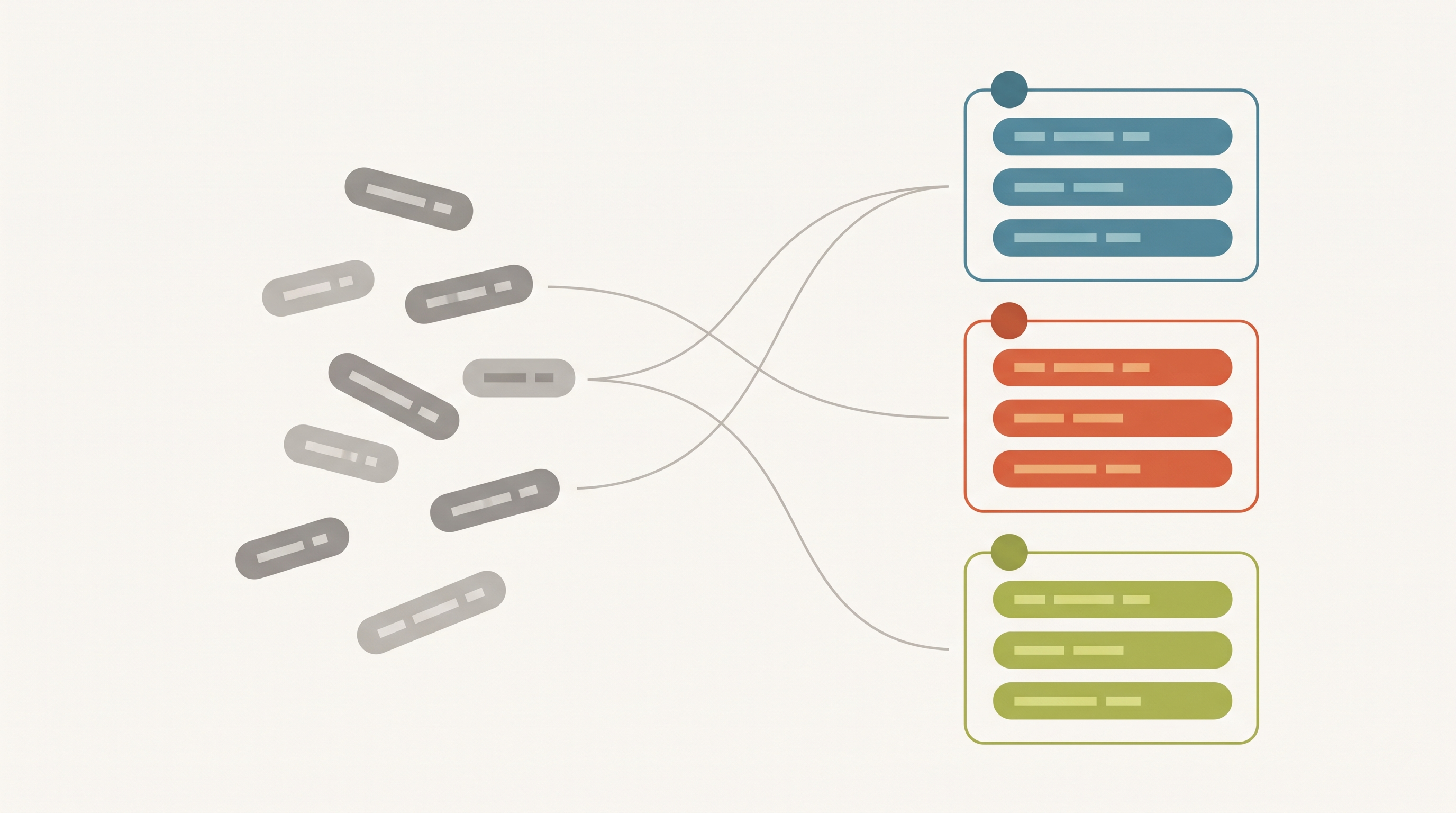
Most articles about topic clusters and answer engine optimization discuss clusters without ever clustering anything. They say "group related content" and move on, as if the grouping happened by itself. This one shows the mechanics: a keyword list goes in, a page plan comes out, and each page gets an answer format.
Do topic clusters help with answer engine optimization?
They help in the way covering a topic properly always has. Google says there are no special requirements for AI Overviews or AI Mode (Google Search Central), and describes optimizing for generative AI as "optimizing for the search experience, and thus still SEO" (Practical Ecommerce, reporting on Google's May 2026 guidance).
Clusters matter because AI features may issue several related searches across subtopics to build one answer, a process explained in what query fan-out is. If your page covers a cluster's sub-questions clearly, it has more to offer that process. Nobody has published proof that clustering raises AI citations, so treat it as sound practice, not a guaranteed lever. Be skeptical of any source quoting a precise "AI visibility uplift" from clustering without naming where the number came from.
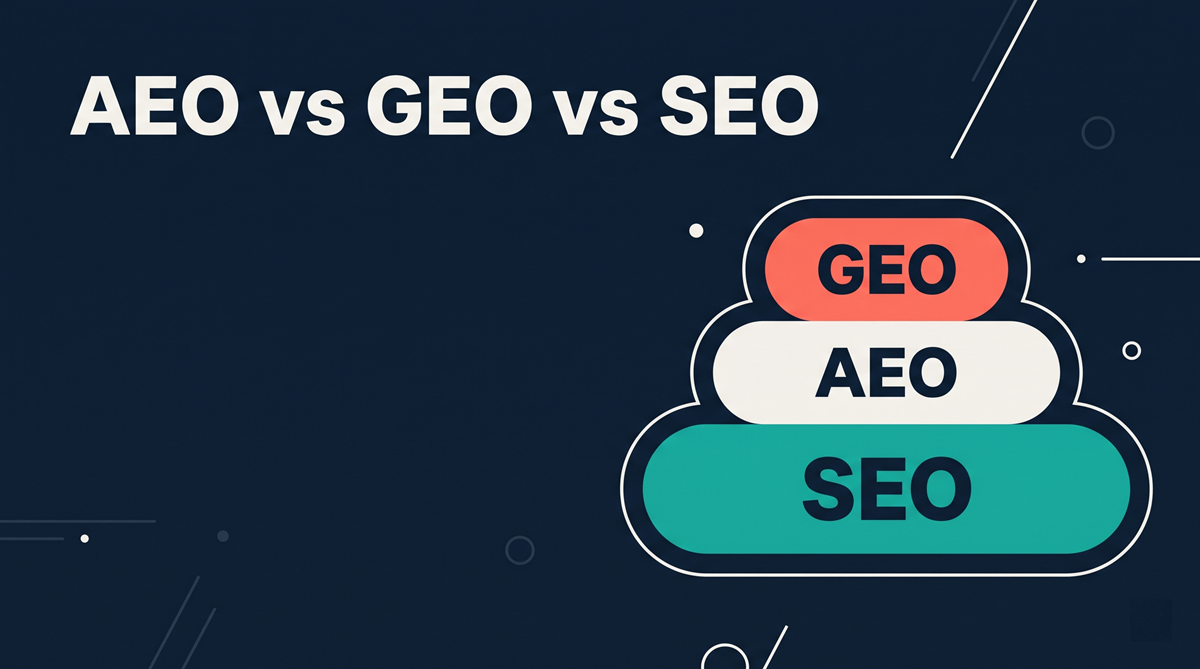
How are AEO clusters different from traditional SEO clusters?
The clusters are the same. What changes is the output. A traditional cluster ends with a page targeting a head keyword. An AEO cluster ends with a page where each sub-question has its own heading and a direct answer.
| Traditional SEO cluster | AEO cluster | |
|---|---|---|
| Starts from | Keywords | Questions and keywords |
| Unit of output | A page | A page with answerable sections |
| Structure | Headings around a keyword | One question per H2, direct answer first |
| Goal | Rank | Rank, and be extractable as an answer |
How do you turn a keyword cluster into content AI can cite?
Follow four steps. The example below is hypothetical, written to show the mechanic.
1. Start with a raw list.
Say these are queries from Search Console:
what is email deliverability
why do emails go to spam
how to improve sender reputation
email bounce rate causes
spf dkim dmarc setup
email warmup how long
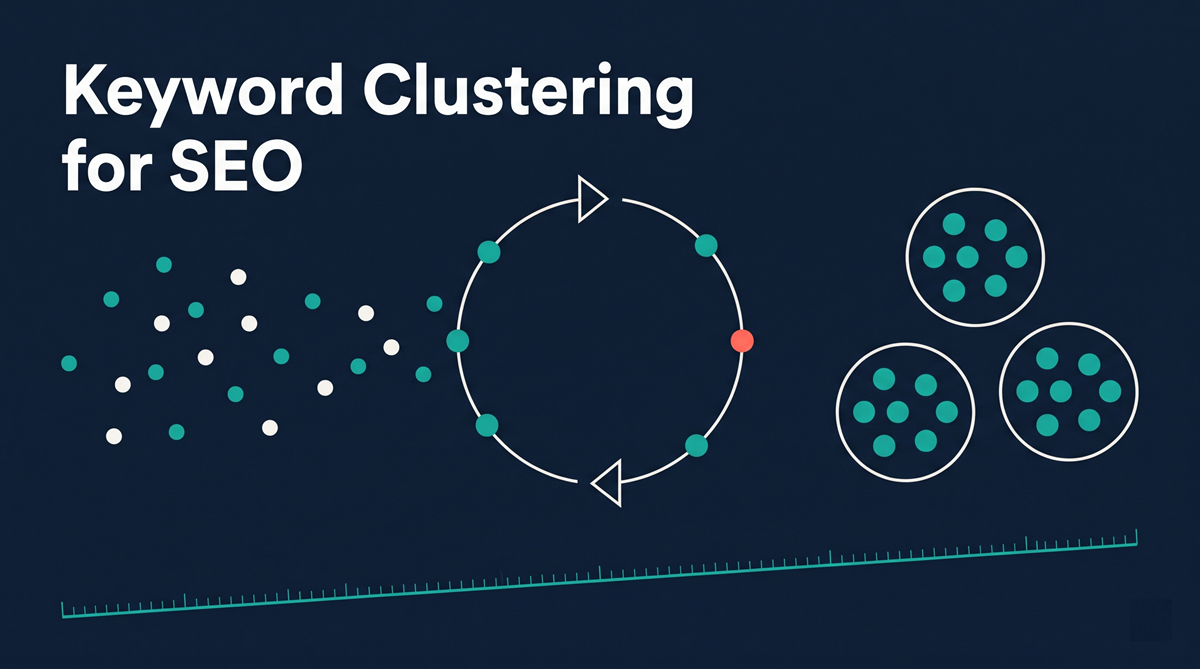
2. Cluster by intent.
If you're new to the idea, start with what keyword clustering is. Group queries that belong on one page. For the full process, see how to group keywords.
Go through semantic keyword clustering for why grouping by shared words fails here: "spam," "bounce rate" and "sender reputation" share no vocabulary but the same intent.
3. Assign a page type.
Definition, how-to, comparison, list, or troubleshooting.
4. Write the sub-questions as H2s.
Under each, a 40-60 word direct answer, then detail.
The result looks like this:
| Cluster | Queries | Page type | H2 sub-questions |
|---|---|---|---|
| Deliverability basics | what is email deliverability, email bounce rate causes | Definition + explainer | What is deliverability? What causes bounces? |
| Spam placement | why do emails go to spam, how to improve sender reputation | Troubleshooting | Why do emails land in spam? How do you fix sender reputation? |
| Authentication | spf dkim dmarc setup | How-to | How do you set up SPF, DKIM and DMARC? |
| Warmup | email warmup how long | How-to | How long does email warmup take? |
Four clusters, four pages, each section answerable on its own. For what real clusters look like in Search Console data, see these keyword clustering examples.
How many pages should an AEO topic cluster have?
One page per cluster. A topic made of four clusters needs four pages, plus a pillar page if you want a hub linking them (see how to build topical authority). The count comes out of the clustering. If a page has to answer three clusters, split it. If two clusters share most of their queries, merge them.
The rule that makes this work: one cluster, one page. One sub-question, one H2.
How do you avoid keyword cannibalization inside a cluster?
Check for overlap before you write. Cannibalization happens when two pages target the same intent and split the impressions. The test is simple: if two clusters, or two existing pages, receive impressions for most of the same queries, they're competing. Merge them into one page, or sharpen each page so it answers a different question.
Search Console shows this directly. In the Performance report, filter by a query and look at the Pages tab. If several URLs get impressions for the same query, you have an overlap. TrackClusters flags cannibalization across clusters automatically, but the manual check above works at any size.
The part to resist
It's tempting to write a clustered page for every possible question. Don't. Cluster the queries you actually rank for or want to rank for, and ignore the rest. Thin pages written to cover a question list read as filler to people and AI systems alike.
Where TrackClusters fits
TrackClusters groups the queries your site already earns impressions for into clusters, using your own Search Console data. That gives you step 2 for the keywords you already have. It won't suggest new questions to target, because it doesn't use search volume or keyword research data. The page types and the writing are yours. The pricing page has the plans and the 7-day free trial.
Related reading
- How to track AI Overview visibility by topic cluster: measuring AI features in Search Console
FAQ
Do topic clusters help with answer engine optimization?
They help by making a topic's sub-questions explicit and answerable. Google says no special AEO optimization is required, so the benefit is better coverage, not a trick.
What is the difference between AEO clusters and SEO clusters?
The grouping is the same. AEO adds an output format: each sub-question gets its own heading and a direct answer.
How long should the direct answer under each heading be?
Aim for 40-60 words. That's a working guideline, not a Google rule.
How many pages does a cluster need?
One. A topic made of several clusters needs one page per cluster.
What is keyword cannibalization?
Two pages competing for the same query intent, splitting impressions. Merge them or differentiate them.
Can I do this without a keyword research tool?
Yes, for queries you already rank for: your Search Console data is enough. A research tool only adds when you're looking for new queries.
Should every cluster get its own page?
Only if the cluster has enough queries and enough distinct intent to justify one. Thin clusters can fold into a related page.
Comments
Join the discussionNo comments yet. Be the first to comment.