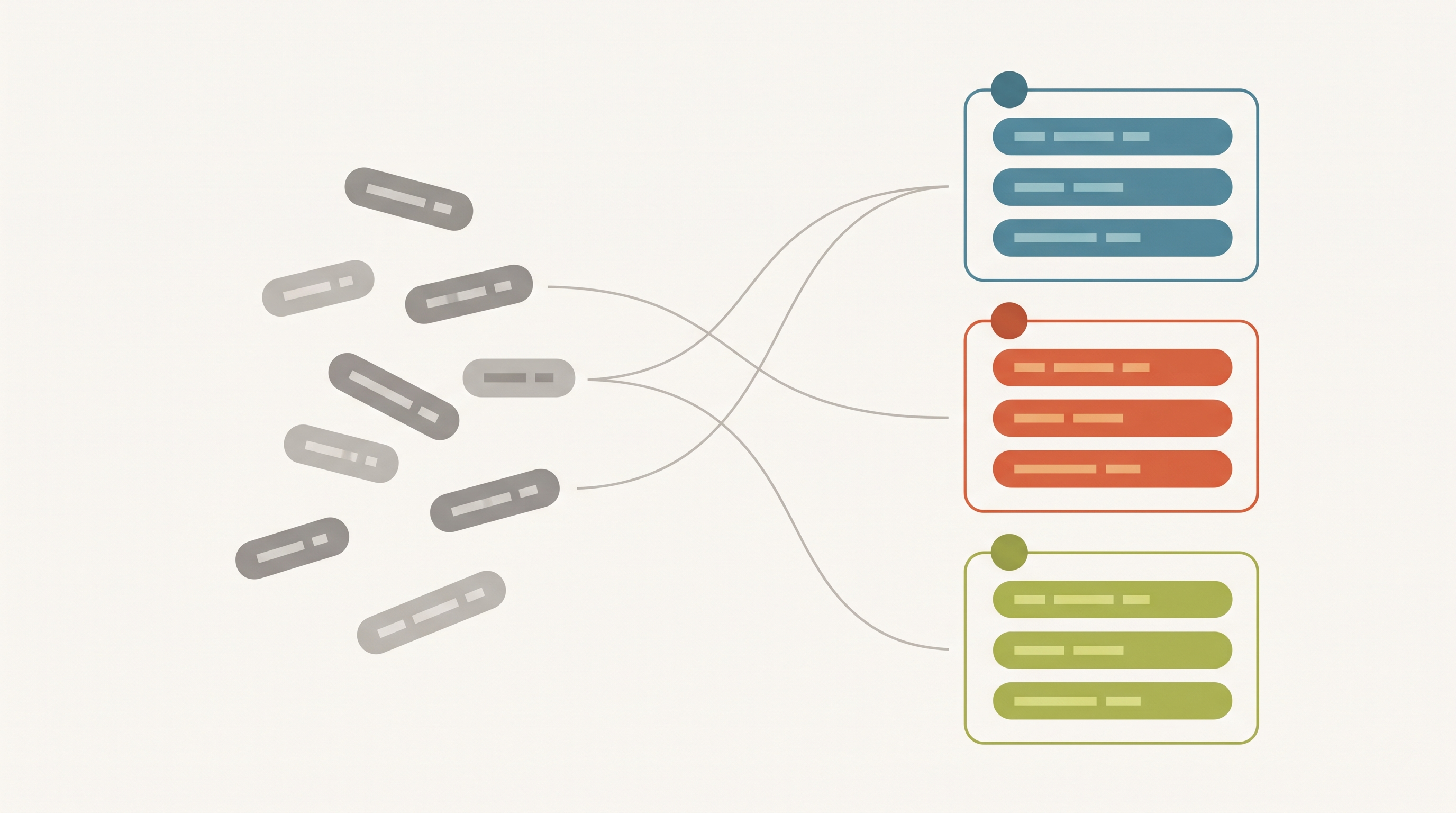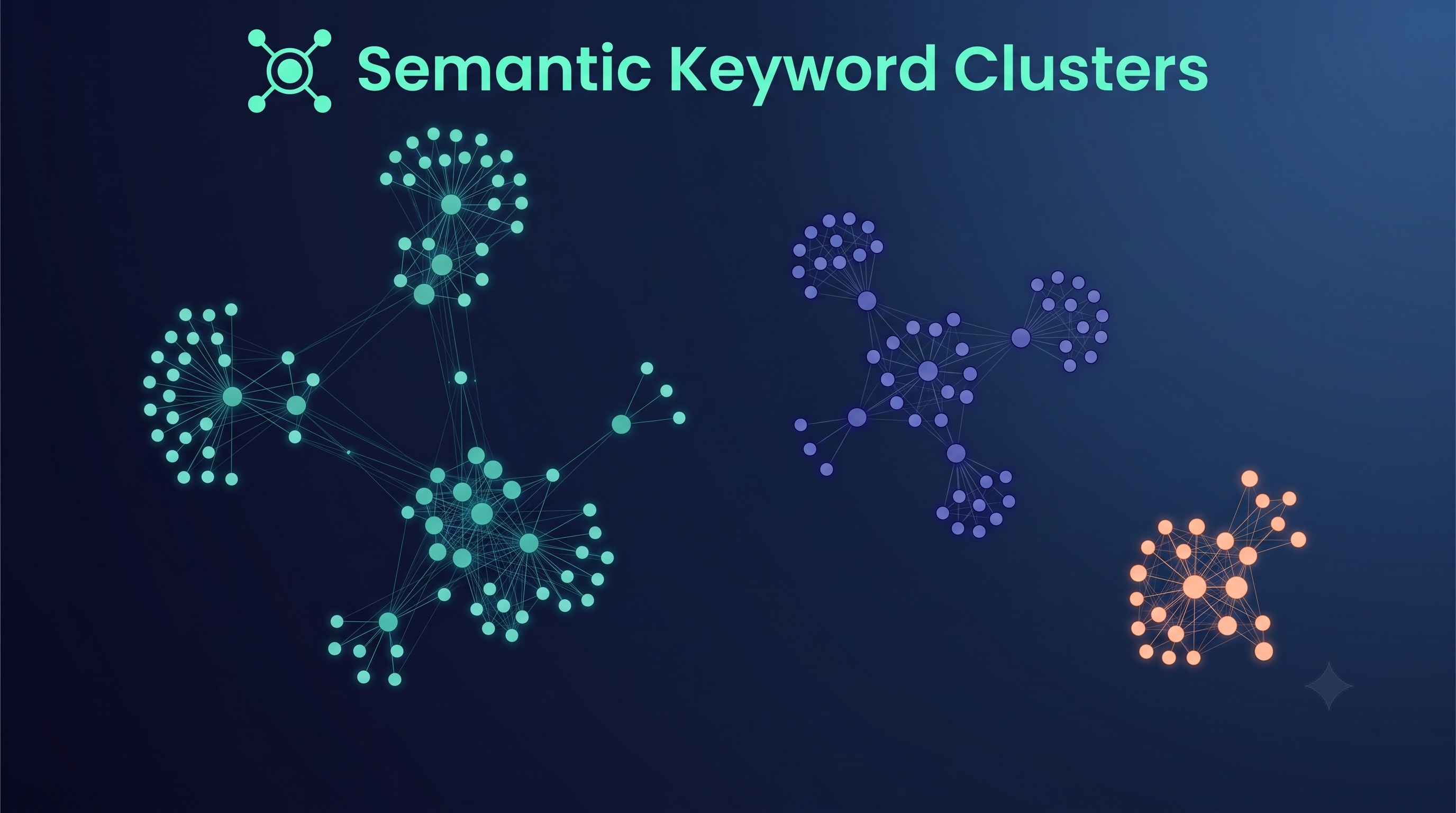
Semantic keyword clustering groups keywords by what they mean, not by what they literally say. "Best running shoes" and "top sneakers for running" land in the same cluster even though they don't share a single word, because the underlying intent is identical. It's the method behind most clustering features you'll find in SEO tools today — and also the most commonly oversold. Half the industry uses "semantic" the way restaurants use "artisanal": as a word that signals quality without committing to a definition.
Here's what it actually means, how it works mechanically, and where it breaks down.
How Semantic Clustering Works
Semantic clustering runs on embeddings — numerical representations of a keyword's meaning, generated by an NLP model. Two keywords that mean similar things end up with embeddings that sit close together in vector space. The clustering step is just math from there: measure the distance (usually cosine similarity) between every pair of keyword embeddings, and group keywords whose distance falls under some threshold.
This is why semantic clustering catches things exact-match or string-matching methods miss. "Cluster keywords" and "group search terms" share zero words but mean close to the same thing, and a decent embedding model will place them near each other. That's the entire value proposition in one sentence: meaning over string similarity.
Semantic Clustering vs. SERP Overlap Clustering
The other common clustering method works differently: instead of comparing what keywords mean, it compares what Google does with them — specifically, how much the top-10 results overlap for each query. If two keywords return mostly the same URLs in position 1-10, Google's own ranking system has effectively already decided they're the same topic, and the cluster follows that signal.
Neither method is strictly better. Semantic clustering is faster to compute and doesn't require live SERP data, which makes it the default in most tools. SERP overlap clustering is slower and API-hungry but occasionally catches something semantic similarity misses — cases where Google treats two oddly-worded queries as the same intent for reasons that aren't obvious from the text alone.
Where Semantic Clustering Gets It Wrong
Embeddings measure similarity of meaning, not similarity of intent, and those aren't the same thing. "Apple pricing" and "orange pricing" are semantically close — both are fruit-pricing queries — but if one searcher means fruit and the other means the phone company, no embedding model catches that without more context than a bare keyword provides. Ambiguous, short-tail terms are where semantic clustering produces confident-looking clusters that are quietly wrong.
This is worth knowing before you trust a tool's clustering output blindly. A clustering algorithm has no idea it made a mistake — it just returns groupings with the same confidence whether the underlying similarity score was 0.95 or 0.61. Spot-checking clusters, especially ones built on short or ambiguous queries, catches this before it skews your reporting.
Semantic Clustering on Research Data vs. Performance Data
Most explanations of semantic clustering assume you're starting from a keyword research export — a list of terms with estimated search volume attached, usually pulled from a tool like Ahrefs or SEMrush. That's a fine starting point for planning new content. It's a weaker one for measuring what's already working, because volume estimates are modeled numbers, not observed ones. A keyword showing "1,000/mo" might get 200 searches or 2,000 — there's real variance hiding behind that single figure.
The alternative is clustering your own Search Console performance data — the actual queries your site is already getting impressions, clicks, and position data for. Nothing here is estimated. It's the record of what real searches actually returned your pages. Semantic clustering works exactly the same way on this data — group by meaning, track the group — but the numbers you're clustering are observed rather than modeled.
A Data Quality Detail Semantic Clustering Doesn't Fix on Its Own
Clustering method has nothing to do with a separate problem that shows up specifically in GSC exports: position 0. Any query ranking outside the top 100 shows up in Search Console with a position value of 0, not blank. Semantic clustering will happily group those position-0 queries into a cluster along with everything else, and if you average position across the cluster without excluding them, the average collapses toward zero for reasons that have nothing to do with real performance decline.
It's a small, specific bug in how most people build clustering spreadsheets, and it's easy to miss because the math still runs without an error — it just returns a number that's wrong. TrackClusters excludes position-0 rows from cluster average calculations by default, which is a narrower and more mechanical fix than "semantic clustering" but matters more for whether your reported numbers reflect reality.
What This Looks Like in Practice
TrackClusters connects to Google Search Console over OAuth — read-only, so it can query your data but can't touch the property itself — and clusters your existing ranking queries automatically, then tracks impressions, average position, and clicks per cluster over time. No search volume estimates, no scraped SERP positions: the data is pulled directly from your own GSC property. Plans start with a 7-day free trial, no credit card required, if you want to see your own queries clustered instead of a demo dataset.
How to Try Semantic Clustering on Your Own Data
- Export 3-6 months of query data from GSC's Performance report, or start from a research tool export if you're planning new content rather than measuring existing rankings.
- Group by meaning, not exact string. "Semantic keyword clustering" and "clustering keywords by meaning" belong together even though the strings don't match.
- Spot-check ambiguous clusters. Short or multi-meaning terms are where semantic similarity most often produces a confident but wrong grouping.
- Exclude position-0 rows from any average position math, independent of which clustering method you used to build the groups.
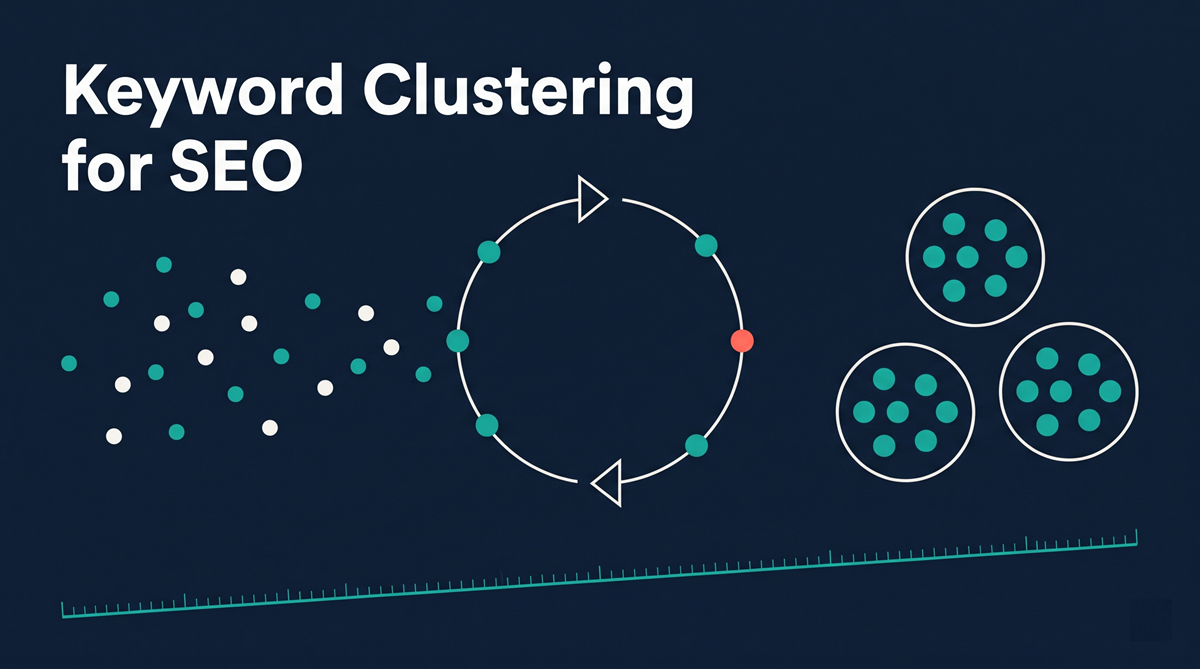
That's the practical version: cluster by meaning, verify the ambiguous cases, and keep the position-0 problem separate from the clustering method entirely — they're different problems that happen to show up in the same spreadsheet. More breakdowns like this live on the TrackClusters blog, including a longer walkthrough of what keyword clustering is if you're starting from scratch. For the full process with a worked example, see how to group keywords.
Related reading
- Keyword clustering examples: what real clusters look like in GSC data
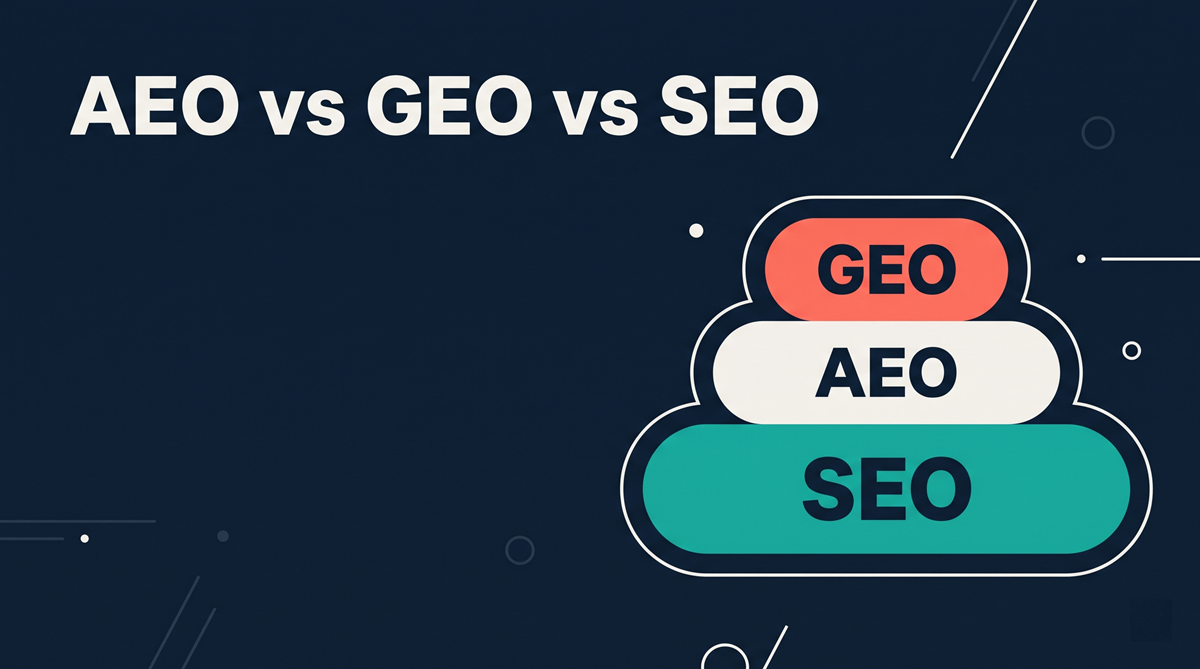
- Keyword clustering for AEO: how to turn clusters into answer-ready pages
FAQ
What is semantic keyword clustering? Semantic keyword clustering groups keywords by meaning rather than exact wording, typically using embeddings or NLP similarity scoring to measure how close two keywords are in intent.
How is semantic clustering different from SERP overlap clustering? Semantic clustering compares the meaning of keywords directly. SERP overlap clustering compares how much the actual Google top-10 results overlap between two queries. Both group by topic; they use different signals to get there.
Does semantic clustering need search volume data? No. Semantic clustering only needs the keyword text itself to generate embeddings and compare similarity. It works the same whether the keyword list comes from a research tool with volume attached or from your own GSC performance data with none.
Why does semantic clustering sometimes group unrelated keywords together? Embeddings measure similarity of meaning, not intent. Short or ambiguous terms — like a word with two unrelated meanings — can end up in the wrong cluster because the model has no extra context to disambiguate them.
What is position 0 and does semantic clustering fix it? Position 0 is what Google Search Console shows for a query ranking outside the top 100. Semantic clustering doesn't address this at all — it groups keywords by meaning regardless of position. Excluding position-0 rows from average position math is a separate step a clustering tool needs to handle on its own.
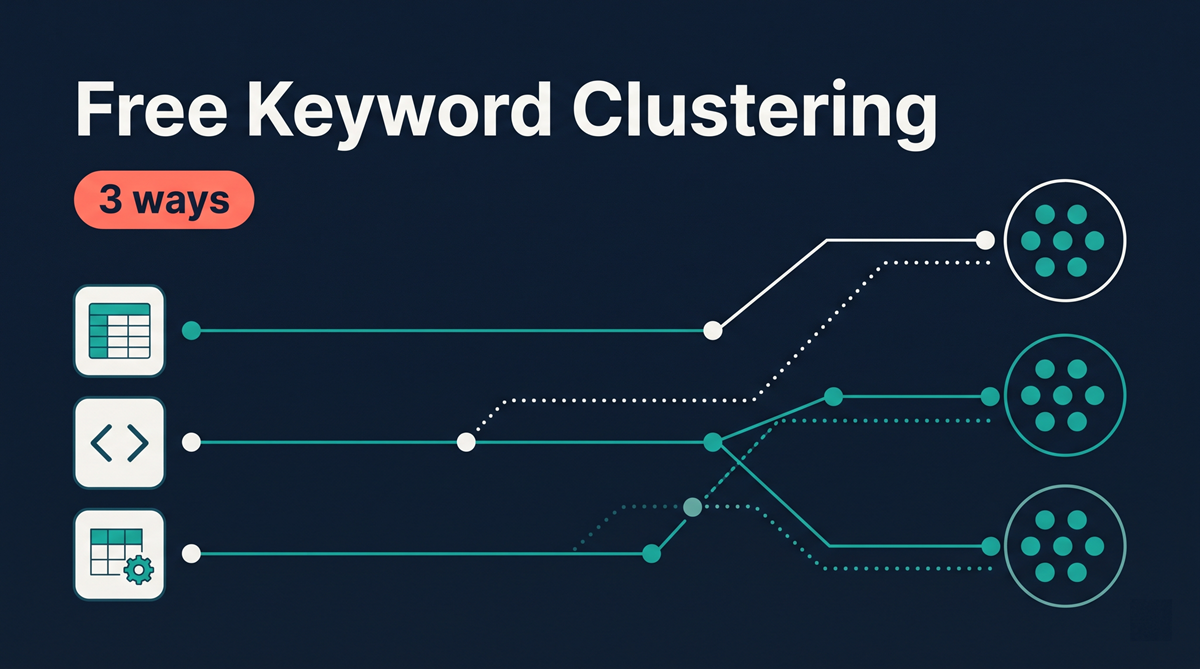
Can I do semantic keyword clustering without code? Yes, if you're using a tool that runs the embedding and similarity comparison for you. Doing it manually without code means falling back to eyeballing a spreadsheet and grouping by judgment, which isn't really semantic clustering — it's manual topical grouping.
Is semantic clustering more accurate than manual grouping? It's more consistent and faster at scale, but not infallible — see the ambiguous-term problem above. A hybrid approach, semantic clustering with a spot-check on questionable groupings, tends to outperform either method used blindly.
Comments
Join the discussionNo comments yet. Be the first to comment.