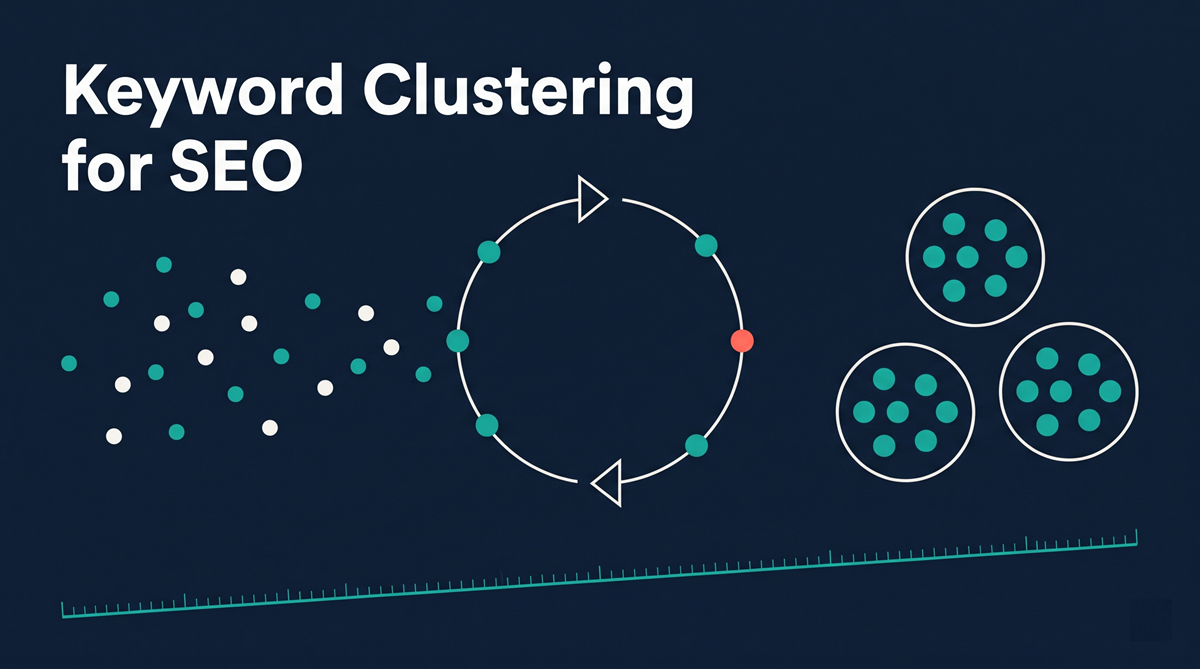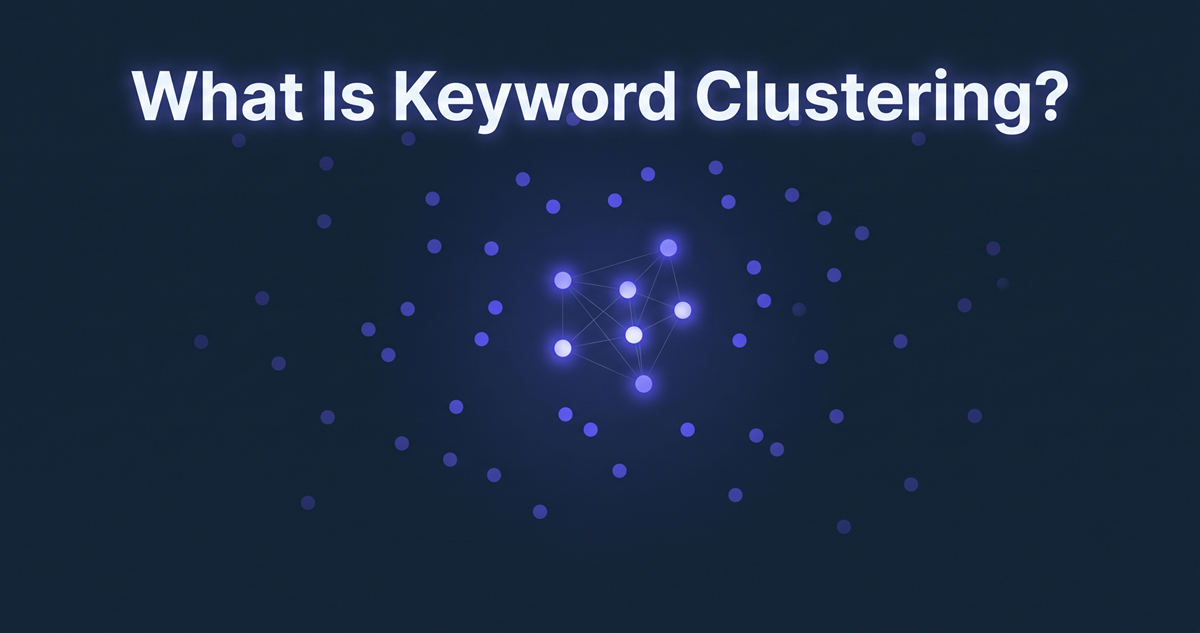
Ask five SEO tools what is keyword clustering or keyword grouping and you'll get five different answers, most of them dressed up as a proprietary algorithm. The real definition is simpler: keyword clustering is the process of grouping related search queries into topic-based clusters, so you can measure how a whole content theme performs instead of squinting at one keyword at a time.
It's a strange gap for an industry this obsessed with measurement. SEO teams track average position to the decimal point, then still report performance keyword by keyword — 500 rows in a spreadsheet, no pattern visible anywhere. Group those same 500 keywords into 20 topic clusters and you get 20 signals you can actually act on.
How Keyword Clustering Works
Clustering takes a list of keywords and groups the ones that are close enough in meaning, intent, or topic to be treated as one unit. Instead of asking "how does keyword clustering tools rank this week," you ask "how is the keyword clustering tools content pillar trending" — the individual keyword becomes one data point inside a bigger signal.
There are two common starting points for the keyword list itself:
Keyword research data — exported from a tool like Ahrefs or SEMrush, usually with estimated search volume attached.
Search performance data — pulled from Google Search Console, showing the queries your site is already getting impressions and clicks for.
Both are valid starting points. They answer different questions. Research data tells you what to target. Performance data tells you what's already working and where it's sliding.
Manual vs. Automatic Clustering
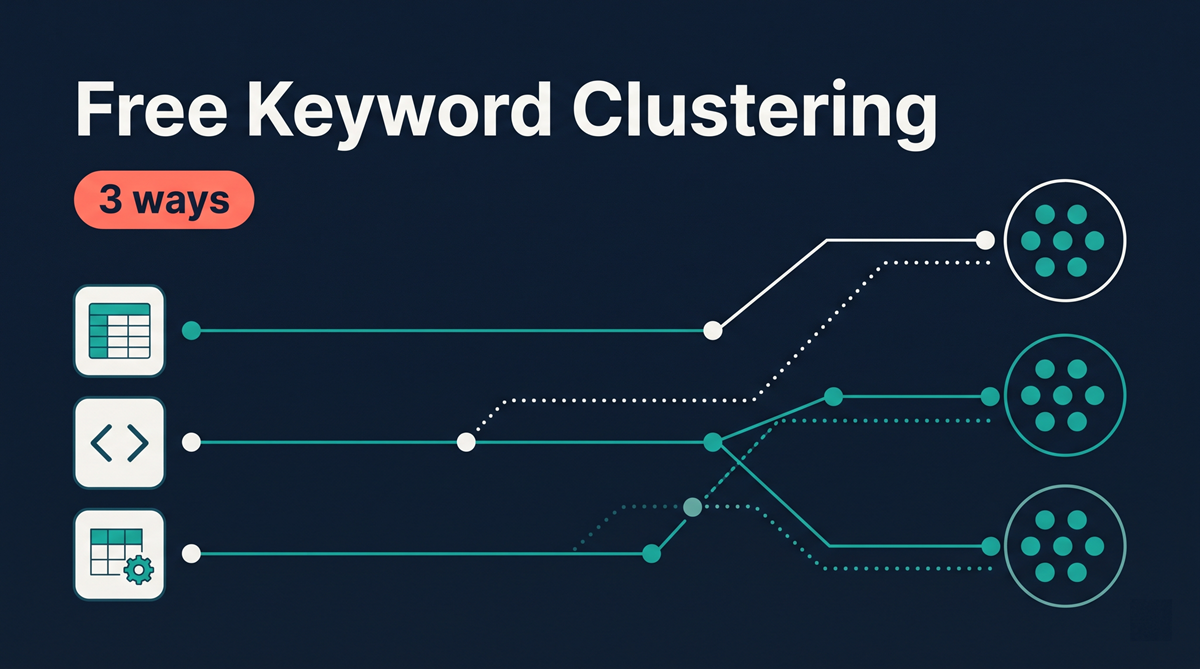
You can group keywords manually — export a list, eyeball it, group by hand in a spreadsheet. It works, and plenty of SEO teams still do it. It also takes hours per pass and goes stale the moment new query data comes in. Automatic clustering tools do the same grouping using semantic similarity or SERP overlap, and update as new data arrives.
Why Cluster Instead of Tracking Keywords Individually
Once a site has more than about 50 ranking keywords, tracking each one separately produces noise, not insight. You can watch a single keyword drop three positions and have no idea whether that's a real problem or normal variance — until you see the other 14 keywords in its cluster move the same direction that same week. That's a content pillar shifting, not a fluke.
This is also where Google Search Console gets underused. It hands you real impression, click, position, and CTR data for every query your site has shown up for, for free. Most people check it once a month, glance at the top 10 rows, and close the tab. There's a lot more signal sitting in there than the top 10 rows show.
Keyword Clustering Methods
A few approaches show up repeatedly when people talk about clustering methods:
Semantic clustering — grouping keywords that mean roughly the same thing ("keyword clustering tool" and "tool for clustering keywords") using embeddings or NLP similarity scoring.
SERP overlap clustering — grouping keywords whose top-10 Google results overlap significantly, on the logic that if Google thinks two queries deserve the same pages, they belong together.
Manual topical grouping — a human decides which keywords belong to which content pillar, based on domain knowledge rather than an algorithm.
None of these methods require search volume to work. That's worth saying plainly, because most clustering guides assume you're starting from a keyword research export. If you're clustering your own ranking queries from GSC, you're clustering based on real impressions and clicks — data with less guesswork than a modeled volume number.
A Data Quality Pitfall: Position 0
Here's a detail most clustering approaches miss entirely. When you export query data from Google Search Console, keywords that rank outside the top 100 show up with a position of 0 — not blank, not null, literally 0. If you average position across a cluster without excluding those rows, your "average position 8" cluster can quietly become "average position 34" the moment a handful of position-0 keywords get pulled into the math. The cluster looks like it's collapsing when it isn't.
It's a small, specific, entirely fixable data quality problem, and it's the kind of thing you only notice after you've built a clustering workflow and watched the numbers do something that doesn't match reality. Excluding position-0 rows from average calculations is one of the more concrete things a good clustering tool should do by default.
Keyword Clustering Tools: What to Look For
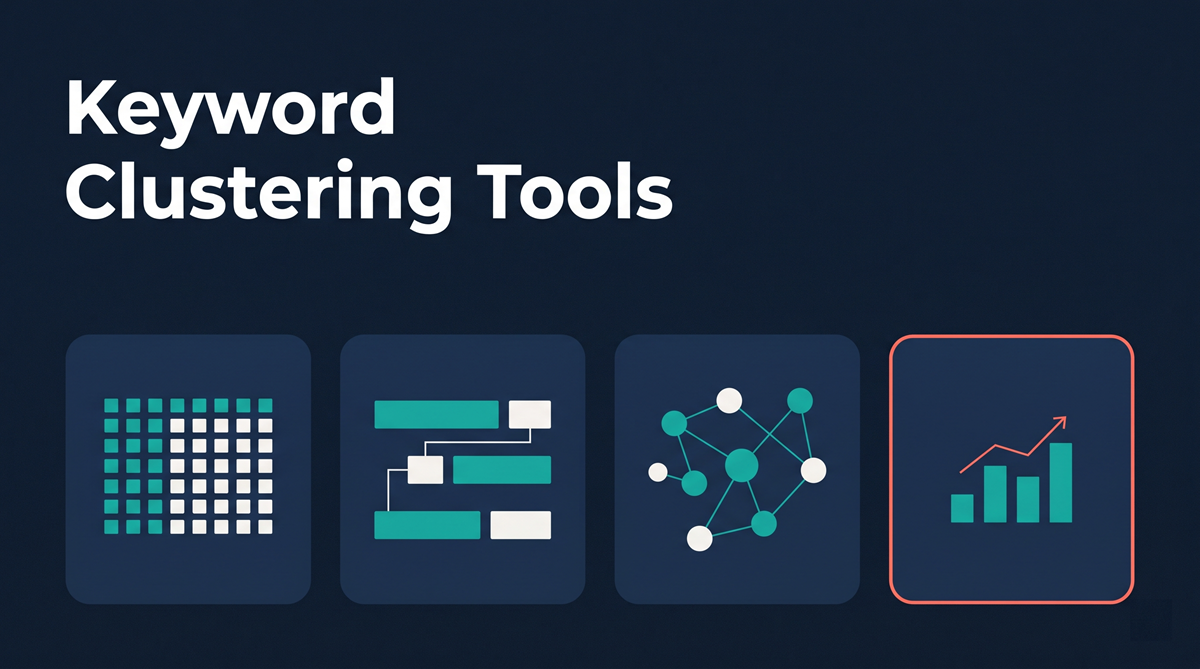
Clustering tools generally fall into two camps. Volume-based tools cluster a keyword research export and estimate opportunity — useful for planning new content, less useful for measuring what you already rank for. GSC-native tools cluster your actual search performance data — real impressions, real clicks, real position, pulled directly from your own property rather than modeled or scraped.
TrackClusters is built for the second case: it connects to Search Console over OAuth, groups your existing ranking queries into clusters automatically, and tracks how those clusters move over time — impressions, average position, and clicks, with position-0 keywords excluded from the averages. The OAuth connection is read-only — TrackClusters can query your Search Console data but can't change anything in the property itself, in line with its privacy practices. Plans start with a 7-day free trial, no credit card required, if you want to see your own query data clustered rather than a demo dataset.
How to Start Clustering Your Own Keywords
If you're doing this for the first time:
Export your query data. Pull the last 3-6 months from GSC's Performance report, or export a keyword list from your research tool of choice.
Group by topic, not by exact match. "Keyword clustering methods" and "how to cluster keywords" belong in the same group even though they're not the same string.
Exclude position-0 rows from any average position math, for the reason above.
Review clusters every 2-4 weeks, not daily. Cluster-level movement is a slower signal than individual keyword rank, and checking too often just reintroduces the noise you were trying to get away from.
If you've ever built a manual GSC clustering spreadsheet, you already know step 4 is where it usually falls apart — the spreadsheet is accurate the day you build it and wrong three weeks later. That's the specific gap automatic clustering tools close: the grouping updates as new query data comes in instead of freezing the moment you finish the pivot table.
That's the shape of it: group first, track the group, watch for position-0 noise. More breakdowns like this live on the TrackClusters blog — and if you want to see your own queries clustered instead of a demo dataset, the free trial runs 7 days with no card required.
Related reading
- Semantic keyword clustering: how grouping by meaning works
- Keyword clustering examples: what real clusters look like in GSC data
FAQ
What is keyword clustering? Keyword clustering is the process of grouping related search queries into topic-based clusters, so performance can be measured at the topic level instead of one keyword at a time.
How is keyword clustering different from keyword grouping? They're generally used interchangeably. "Clustering" more often implies an automated or semantic method; "grouping" is sometimes used for manual, human-judgment groupings. Neither term has a strict industry-wide definition.
Do I need search volume data to cluster keywords? No. Clustering can run on search volume data, but it can also run on real performance data — impressions, clicks, and position — pulled directly from Google Search Console. Volume isn't required.
How does GSC data help with keyword clustering? Search Console shows the queries your site is already getting impressions and clicks for, with real position and CTR data. Clustering that data shows which topic areas are actually working, not which keywords a research tool estimates you could target.
What is position 0 in Google Search Console and why does it matter for clusters? Position 0 is what GSC shows for a query ranking outside the top 100. Included in a cluster's average position calculation, it drags the average down artificially and makes a cluster look worse than it performs.
Can I cluster keywords manually in a spreadsheet? Yes. It works for a one-time pass but takes real time and goes stale as soon as new query data comes in, since nothing updates it automatically.
How often should keyword clusters be updated? Every 2-4 weeks is a reasonable cadence for most sites. Cluster-level movement is a slower, steadier signal than individual keyword rank.
Is keyword clustering the same as topic clusters in content strategy? Related but not identical. Content topic clusters describe how you structure content (a pillar page plus supporting posts). Keyword clustering describes how you group search queries for tracking and analysis. The two often align, but one is a content structure and the other is a measurement method.
Comments
Join the discussionNo comments yet. Be the first to comment.